Montessori Pathways
Exploring Montessori-Inspired Approaches to Learning
The Montessori approach is built on a deep respect for the child as an active and capable learner. Rooted in observation, independence, and purposeful exploration, Montessori education encourages children to develop confidence, responsibility, self-discipline, and a lifelong love for learning.
Montessori Pathways introduces educators to the principles, philosophy, and practices that have made Montessori education one of the most influential approaches in early childhood learning worldwide. It explores how thoughtfully prepared environments, meaningful learning experiences, and respectful adult-child interactions can support children’s natural development and curiosity.
At Morenateach, we believe that understanding Montessori principles can help educators create learning environments that foster independence, concentration, creativity, and self-directed learning while honoring the unique pace and potential of every child.
Understanding the Montessori Philosophy
Develop an understanding of the key principles that guide Montessori educations, including respect for the child, independence, freedom within limits, and learning through puposeful activity.
The Child as an Active Learner
Explore how children learn through exploration, choice, movement, repetition, and meaningful engagement with their environment.
The Role of the Educator
Understand how educators observe, guide, and facilitate learning rather than direct every aspect of the learning experience.
The Prepared Environment
Discover how thoughtfully designed learning spaces encourage independence, exploration, responsibility, and self-motivated learning.
Learning Through Experience
Examine how hands-on experiences help children build understanding, develop skills, and connect learning to real-world experiences.
Key Areas of Learning
01
Practical Life
Activities that support independence, concentration, coordination, responsibility and everyday life skills.
02
Sensorial Learning
Experiences that help children refine their senses, develop observations skills, and build a deeper understanding of the world around them.
03
Language Development
Approaches that encourage communications, vocabulary development, literacy, and self-expression.
04
Mathematical Thinking
Hands-on experiences that help children develop number sense, reasoning, sequencing, and problem-solving skills.
05
Cultural Awareness
Learning experiences that foster curiosity about people, places, nature, science, and the wider world.
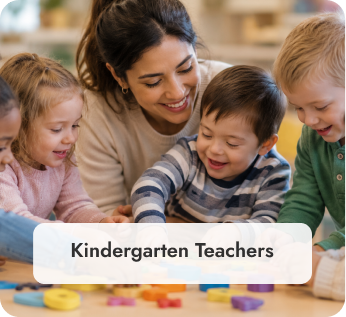
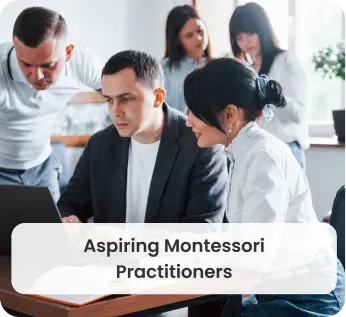
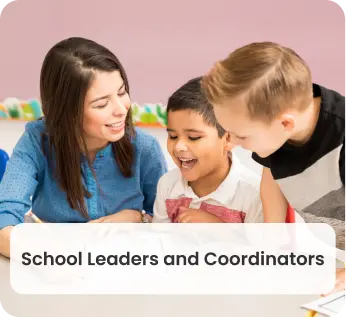
Who Our Programs Are Designed For?




Our Philosophy
We view Montessori education not simply as a method, but as a philosophy that values the individuality, capability, and potential of every child. Our programs help educators understand and apply Montessori-inspired principles in ways that support meaningful learning, independence, and holistic development.